

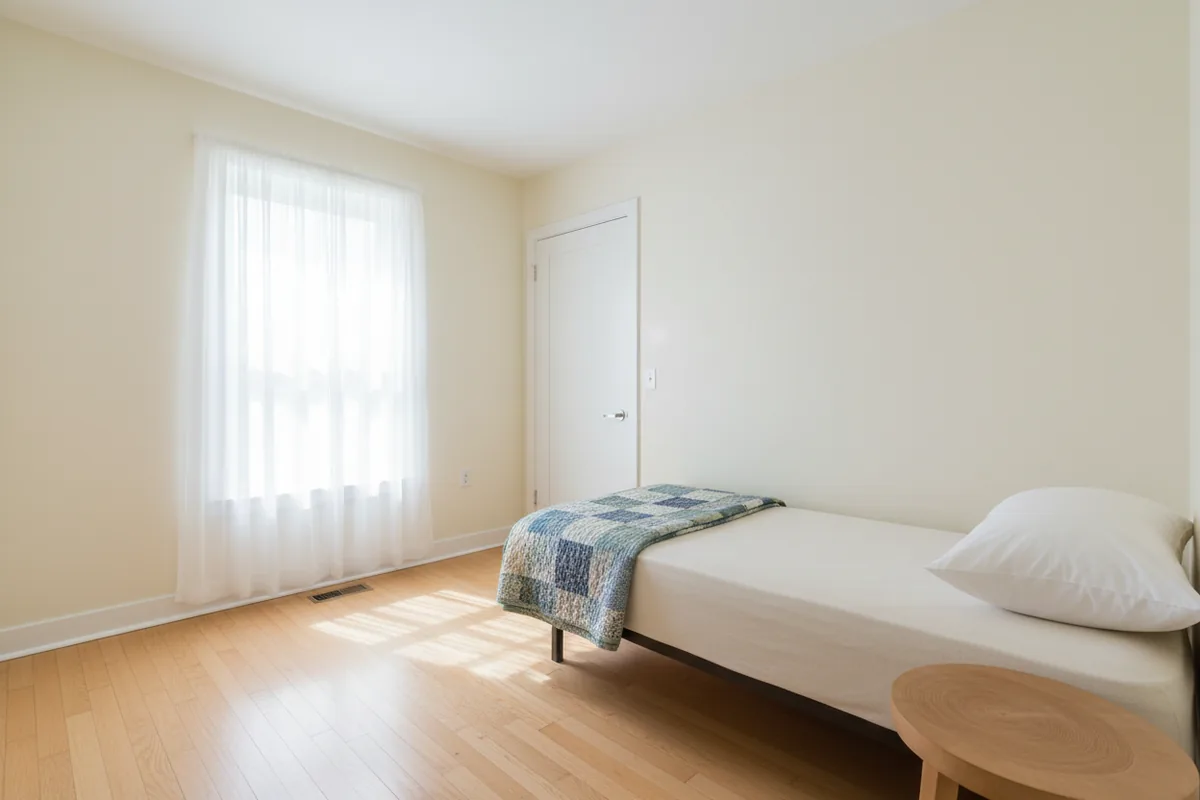
The community has been chosen, and now a whole household has to become one room or a small apartment. You may be doing this for a parent, a spouse or yourself, perhaps with siblings weighing in from another city, and the open question is what comes first. The care decision is already behind you. What is in front of you is the move, and the move can be taken one stage at a time.
For a move within California, planning an assisted living move rests on three threads: what the community requires, which belongings fit the new room, and which important papers belong together in one place. The work moves from measuring the room and doorways, to sorting with a floor plan, to a mover's estimate given only after a visual inspection, and finally to a move-in day set with the community's coordinator.
On this page
- What Planning an Assisted Living Move Covers
- The People Who Plan and Carry Out the Move
- Before the Move: What to Gather, Measure and Confirm
- The Move, Step by Step
- What Each Stage of the Move Depends On
- Documents and Records to Have Ready for the Move
- Common Problems in an Assisted Living Move, and Who Resolves Each
- Frequently asked questions
- Sources
What Planning an Assisted Living Move Covers
An assisted living move is a household move into a care setting. The National Institute on Aging describes assisted living as being "for people who need help with daily care, but not as much help as a nursing home provides," with residents who "usually live in their own apartments or rooms and share common areas" (NIA). That smaller private space is what sets this move apart from an ordinary relocation.
Three differences shape the work:
- Less room. Belongings are chosen to fit a defined space, not a whole house.
- The community's own rules. The community sets move-in requirements, paperwork and building access.
- Emotional weight. Sorting a lifetime of belongings is often harder than packing them.
The checklist follows three threads: the facility side (what the community needs), the belongings side (what to bring, measure and sort) and the paperwork side (documents and records to have ready). For a move within California, the household goods mover, meaning the company that loads, transports and unloads belongings, is overseen by the California Bureau of Household Goods and Services (BHGS).
The People Who Plan and Carry Out the Move
The person moving is at the center. Their preferences about what comes along, what goes to family and how the new room looks belong to them as far as they are able to share them.
Others usually involved:
- Family members or a designated decision-maker. One person often keeps the lists and the calendar, even when several relatives share decisions.
- A senior move manager. A professional who coordinates sorting, packing, planning the floor plan and settling in. This is organizing and coordination work, different from transport.
- A household goods mover. The company that moves boxes and furniture from one address to the other. The two roles sometimes work on the same move.
- The community's move-in coordinator. The person at the assisted living community who provides room dimensions, move-in rules and the list of required documents.
- The community's staff. The NIA suggests getting to know staff before the person moves in and talking with them "about ways to make the transition go smoothly" (NIA).
Decisions about the level of care belong to the person, the family and the physician or care team. The move itself is a separate set of tasks, and this checklist stays with those.
Before the Move: What to Gather, Measure and Confirm
Four things in hand make every later stage easier. None of them requires packing a single box.
- Room dimensions from the community. Ask the move-in coordinator for the measurements of the bedroom, living area and doorways, along with any shared spaces the resident will use.
- The community's move-in list. The coordinator is the source for what the community requires on or before move-in day, such as a signed admission agreement and any health forms it names.
- Important papers, located. Find where personal, financial, legal and health papers are kept today, even before organizing them.
- A date for the mover's in-person look at the belongings. That visit comes before any estimate, so it goes on the calendar before the move date is set.
Several things can wait: deciding which family member gets which keepsake, selling or keeping the house, and booking the move date itself. The house is its own decision, separate from getting settled in the new room.
The Move, Step by Step
The four steps follow each other because each one supplies what the next needs: sorting comes from room size, the floor plan comes from sorting, the mover's estimate comes from the final list, and move-in day comes from the community's rules.
Step 1: Sort and Decide What Comes Along
Sorting starts from the room dimensions. Only furniture and items that fit the new space and serve the person's daily life need to make the trip. Downsizing here means reducing a household to fit a smaller home. Rightsizing means choosing what suits the life the person will actually live there, which is sometimes less and sometimes simply different.
Work through categories rather than the whole house at once:
- Furniture: the pieces that fit the measured room and are used every day.
- Clothing: what suits the season and the new routine.
- Personal keepsakes: photographs, letters and objects that make a room familiar.
- Medical equipment: items the person uses now, which the community can say how to place.
- Family pieces: items with meaning to relatives, set aside for a separate conversation.
Items that are not coming along can go to family, to donation, to recycling or, for paints, chemicals and similar products, to household hazardous waste collection. Your county or city's own pages on donation, recycling and household hazardous waste set the local drop-off rules. A senior move manager can take on this sorting stage, organizing categories and keeping decisions moving while the person makes the choices.
Sorting is also where the hardest conversations tend to come up. The NIA advises being supportive and listening to concerns, and not arguing with the older adult about why they need to move (NIA). When several relatives are involved, setting family pieces aside for their own conversation keeps those discussions separate from the daily decisions about what fits the room.
Step 2: Plan the New Space
A floor plan for the new home is a simple drawn or digital layout of the room, made from the dimensions the community provides. It shows which pieces fit and where each one goes, before anything is loaded.
Points to settle while drawing it:
- What the room already has. Ask the coordinator whether a bed frame, dresser or window coverings are included, so nothing duplicates them.
- Clear paths. Leave room between pieces for walking and for any mobility equipment.
- Labels. Mark each box and furniture piece with its place in the new room, such as "closet," "nightstand" or "by the window."
- Familiar touches. A favorite chair, a lamp from home and photographs help a room feel like the person's own. The coordinator can say what is permitted on walls and floors.
Step 3: Hire and Work With a Household Goods Mover
The BHGS flyer Helpful Tips When Moving: Moves Within California sets out what to check with a mover for a move inside the state (BHGS):
- A permit. The flyer states that all household movers must have a permit issued by BHGS, and that a mover can be checked for active status, good standing and insurance on the BHGS website at www.bhgs.dca.ca.gov, as the flyer gives it.
- A visual inspection. The flyer states it is illegal to provide an estimate without a visual inspection for moves within California, and it urges an in-person inspection rather than one by video or photos.
- The not-to-exceed price. The flyer advises getting multiple estimates and receiving the estimate, including the "not to exceed price," at least three days before moving day. It describes that price as the maximum that can be charged unless additional services are requested.
- Written change orders. Any change orders, the flyer says, are to be in writing and signed by both parties before goods are loaded onto the truck.
- How the move is charged. The flyer notes that moves of less than 100 miles can be charged by the hour, and moves of more than 100 miles must be charged by weight and mileage.
- Inventory and irreplaceable items. The flyer suggests notes and photographs of belongings before and during the move, and moving irreplaceable items, such as important documents, family photos and jewelry, yourself.
Two terms often come up in conversations with movers. A binding estimate is one the mover agrees to hold to. A non-binding estimate is an approximation that can change. Under the BHGS flyer, the not-to-exceed price marks the upper limit. A moving inventory is the written list of every item loaded, and keeping your own copy gives you a record to compare against at unloading.
If something goes wrong, the flyer states that a complaint can be filed with BHGS online or by calling (916) 999-2041, option 5 (BHGS). The flyer covers moves within California. A move to another state follows other rules, and the destination state's own rules may also apply.
Step 4: Coordinate Move-In Day With the Community
Move-in day runs on the community's schedule. The move-in coordinator can confirm:
- The move-in window: the days and hours the community allows moves.
- Building access: elevator reservations or a loading area for a building with more than one floor.
- Paperwork on arrival: the documents the community's own list asks for, ready to hand over.
- Who directs the movers: a family member or the senior move manager on site can point to the floor plan and handle last-minute decisions.
Once the person has moved, the NIA suggests checking in regularly, watching for signs that more attention may be needed, and building a relationship with staff so you work together as partners (NIA). The NIA also notes that feelings about the move "may range from loss and guilt to a sense of relief," and suggests sharing them with a social worker or mental health professional.
What Each Stage of the Move Depends On
Each stage rests on something outside your control or on a task before it:
| Stage | What it depends on |
|---|---|
| Sorting | The room dimensions, plus the volume and condition of belongings and any items needing special handling |
| Floor plan | The final sorted list and what the community already furnishes |
| Mover's estimate | The in-person inspection of the home by the mover |
| Move date | Receipt of the not-to-exceed price and the community's move-in window |
| Move-in day | Building access and the community's required paperwork |
Paperwork runs alongside every row. Papers already gathered, with a trusted person knowing where they are, remove one of the more frequent holdups at the community's door.
Documents and Records to Have Ready for the Move
The NIA's Getting Your Affairs in Order Checklist suggests putting "your important papers and copies of legal documents in one place," whether a file, a drawer or a notebook listing what each paper is and where it lives (NIA). It describes including personal, financial and health information, and notes that a pet owner would add the veterinarian's name and address.
Documents the NIA checklist names:
- Estate and financial documents: a will, a durable power of attorney for finances and a living trust, where the person has them.
- Advance directives: a living will and a durable power of attorney for health care, which names a health care proxy.
- Permission forms: the NIA notes that a caregiver can be given permission to talk with doctors, a lawyer, an insurance provider or a bank, and that this may mean signing and returning a form. It explains that this is different from naming a health care proxy.
- Copies: the checklist suggests keeping copies at home of papers held in a bank safe deposit box.
The NIA also suggests telling someone you know and trust, or a lawyer, where to find the papers. That person does not need to discuss the affairs themselves, only know where the papers are. During a move, the folder travels with the person or a family member, not on the truck, in line with the BHGS flyer's note on moving important documents yourself.
The community's move-in coordinator holds the list of what the community itself requires, including its admission agreement. Questions about what a document means for the person's estate, money or health belong to the attorney, financial adviser or physician who handles those matters.
Common Problems in an Assisted Living Move, and Who Resolves Each
A few problems come up again and again, each with a known fix:
- Furniture that does not fit. Measuring the room and doorways before moving day, and drawing the floor plan from those numbers, catches this early. The coordinator supplies the measurements.
- Missing documents at move-in. The coordinator provides the community's list ahead of time. Gathering those papers before the mover is booked removes the scramble on arrival.
- Estimate surprises. The written not-to-exceed price and signed change orders are the check. Complaints about a California mover go to BHGS.
- Items lost or left behind. Your own copy of the moving inventory, plus photographs, accounts for what was loaded. Irreplaceable items ride with the family.
- Overwhelm from sorting. Working one category and one room at a time keeps the task in reach. A senior move manager can take on the coordination.
- Disagreement with the person moving. The NIA approach to conversations with the person moving applies: listen, and leave the reasons for the move out of the argument.
The usual first moves are two: a call to the community's move-in coordinator for room dimensions and the required document list, and a look at the NIA's Getting Your Affairs in Order Checklist to see which papers are already together and which are still to be found.
Ready when you are — and not before.
A first conversation is simply a conversation. With your consent, your request may be passed to a partner who may respond.
Frequently asked questions
How do you prepare to move into assisted living?
Preparation follows three threads: gathering personal, financial, legal and health papers in one place; planning the new room from dimensions the community provides; and hiring a California household goods mover who gives an estimate only after a visual inspection. The community's move-in coordinator is the source for what the community requires.
How do you get a senior into assisted living?
Whether assisted living is the fitting level of care is decided by the person, the family and the physician or care team. Once a community is chosen, the move itself involves sorting belongings, planning the new space, gathering required documents, hiring a mover and coordinating move-in day with the community.
Can a parent be moved into a nursing home against their will?
That is a legal and care question rather than a moving one. It turns on the person's own capacity and on any power of attorney or conservatorship under California law, and the person's physician or care team and the person's attorney are the ones who address it.
What documents does an assisted living facility require at move-in?
Each community sets its own list, and the move-in coordinator provides it, often starting with a signed admission agreement. For the personal papers to have ready, the NIA's checklist names a will, powers of attorney, a living trust where one exists, and advance directives such as a living will.
What are the rules for hiring a mover in California for an assisted living move?
The BHGS flyer for moves within California covers a BHGS permit, an in-person visual inspection before any estimate, a not-to-exceed price received ahead of moving day, written and signed change orders, and complaints filed with BHGS. Step 3 sets out each point as the flyer states it.
What is a senior move manager and how is that different from a mover?
A senior move manager coordinates sorting, packing, floor-plan planning and settling in. A household goods mover transports boxes and furniture between addresses. The roles are distinct and sometimes work on the same move.
What important papers should be gathered before an assisted living move?
The NIA checklist names estate and financial documents such as a will, a durable power of attorney for finances and a living trust, and advance directives such as a living will and a durable power of attorney for health care. It suggests keeping them in one place and telling a trusted person where they are.
What happens to belongings that do not fit in the new assisted living room?
They can go to family members, to donation, to recycling or, for items such as paints and chemicals, to household hazardous waste collection. A county or city page on donation, recycling and hazardous waste sets the local drop-off rules.