

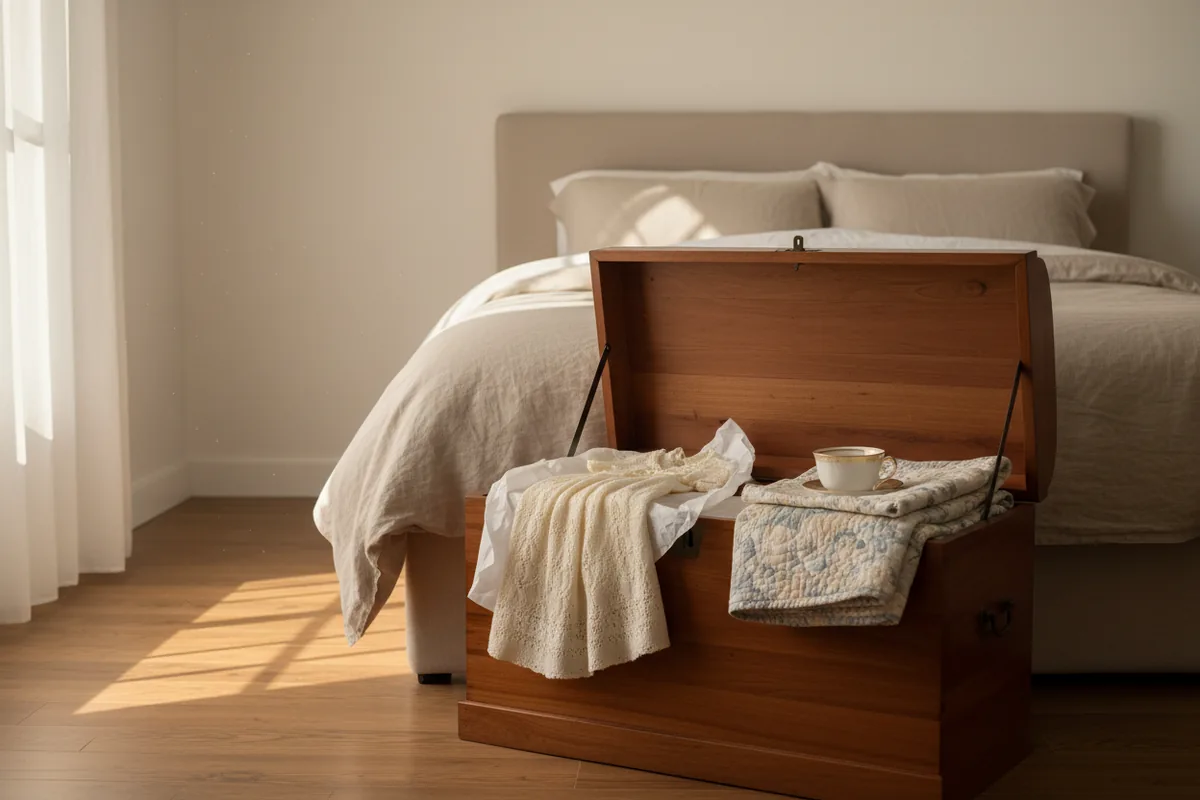
You may be an older adult leaving a home of many years, an adult child helping a parent move to a smaller place, or an executor sorting a household after a death. The furniture and kitchenware tend to be straightforward. The photo albums, letters and the quilt a grandmother made are not. What follows covers how these decisions take shape, what California's moving guidance says about irreplaceable belongings, and which questions are worth raising before anyone opens the first box.
Sentimental items in a senior move are kept, passed to family, donated, or photographed and then let go. The decision for each one belongs to the person moving and the family around them. California's household goods regulator suggests listing your belongings before the move and carrying irreplaceable things such as family photos yourself instead of loading them on the truck.
On this page
What Sentimental Items Mean for Families During a Move
A sentimental item is an object whose value comes from memory, relationship or personal history, not from its market price. Photographs, letters, handmade objects, heirlooms and gifts from people who mattered all fall into this group. A chipped teacup can mean more to a family than a costly chair.
Three kinds of value can sit in a single object, and none of them ranks above the others:
| Kind of value | What it rests on | Example |
|---|---|---|
| Sentimental | Memory, a person, a life event | A wedding album |
| Monetary | What the object could sell for | A piece of jewelry |
| Functional | Daily use in the new home | A favorite reading chair |
These decisions come up during downsizing, which means moving from a larger home to a smaller one and choosing what fits the new space. They also come up in a move into a retirement community or assisted living, and when an estate is being settled. In each case, physical space or circumstances decide that not everything can come along.
The same object can mean different things to different people. A mother may treasure a recipe box for the hand that wrote the cards. One son may not remember it at all, and a daughter may want it more than anything else in the house. That gap is why choices about keepsakes take more time and care than choices about towels or tools. Decluttering, the broader work of clearing out what a household no longer uses, touches these items only at the edges. Keepsakes call for their own conversation.
Who Faces These Decisions and When
Several kinds of people end up holding a keepsake and wondering what to do with it:
- The older adult who is moving and choosing what to bring.
- Adult children helping a parent, whether they live nearby or across the country.
- A surviving spouse deciding what to keep from a shared household.
- An executor or trustee responsible for an estate's belongings.
The events that bring these questions forward include a planned move to a smaller home, a move into assisted living or a continuing care retirement community, a death in the family, and a household goods move within California. A household goods mover is a moving company that transports a household's furniture and belongings. In California, it is regulated by the state.
Timing differs from one household to the next. Some decisions happen well before a move, when there is room to talk. Others come up during packing, when a forgotten box turns up in a closet. Still others wait until after arrival, when it becomes clear what actually fits in the new rooms. An item set aside as undecided during packing can come back up once the person has settled in.
How Decisions About Keepsakes Vary From Person to Person
The size and layout of the new home shape the decision first. A floor plan is a drawing of the new rooms that shows walls, doors and windows. It lets a family see whether a china cabinet or a cedar chest has a place, or whether wall space will hold a few framed photos and not a whole gallery.
Other factors shape each family's path:
- The older adult's own wishes. The person moving decides what matters most to them. Those wishes can differ from what relatives expect.
- How many family members are involved. One helper and five siblings make for very different conversations.
- The condition of the items. A fragile letter or a damaged frame may raise its own questions about how it can be kept or moved.
- Whether items can be shared. A set of dishes can be divided, but a single portrait cannot.
The National Institute on Aging, on its Aging in Place: Growing Older at Home page, encourages older adults to talk with family, friends and other caregivers about the support they need, and to plan to revisit the decision as needs change over time. That page is about staying at home as one ages. The same idea of planning together and coming back to a decision carries over to keepsakes. A choice made early is not final.
The range of paths for any single item includes:
| Path | What it involves |
|---|---|
| Keeping it | The item moves to the new home and has a place there |
| Passing it to family | A relative takes it now instead of later |
| Donating it | The item goes to an organization that can use it |
| Photographing or digitizing | The memory is preserved without keeping the object |
| Carrying it personally | The person or a relative moves it outside the mover's load |
No path is the right one for every family. One household photographs a closet full of children's artwork and keeps three pieces. Another keeps every letter and makes room by giving up a sofa. Both are reasonable answers to the same question.
Moving Irreplaceable Items: What California's Rules Say
California's Bureau of Household Goods and Services (BHGS) regulates household movers in the state. Its flyer Helpful Tips When Moving: Moves Within California states that all household movers must have a permit issued by BHGS. The flyer also says to check that a mover is in active status, in good standing, and insured.
On belongings themselves, the BHGS flyer says to take notes and photographs of your belongings before and during the move. That record is an inventory, a written and photographed list of what is being moved. For keepsakes, an inventory serves two purposes. It documents what the family has, and it creates a record if something goes wrong.
The flyer also says to move any irreplaceable items yourself, and it gives important documents, family photos and jewelry as examples. For a family sorting keepsakes, this guidance draws a clear line. The items that cannot be replaced if lost or damaged are the ones the flyer points toward keeping out of the truck. They travel in the family's own car or in someone's hands.
Several other points in the flyer bear on a move that includes treasured belongings:
- The flyer states that it is illegal to provide an estimate without a visual inspection for moves within California.
- It recommends an in-person inspection instead of one by video or photos.
- It recommends that the contract include a "not to exceed price," which it describes as the maximum amount you can be charged unless you request additional services.
- It says change orders should be in writing and signed by both parties before any goods are loaded.
According to the flyer, if something goes wrong during a move, a complaint can be filed with BHGS online or by phone.
The BHGS flyer covers moves within California. For a move from California to another state, federal rules apply, and the Federal Motor Carrier Safety Administration (FMCSA) is the federal agency for moves between states. The destination state's own rules may also apply.
Questions to Raise Before Sorting Begins
A family conversation about keepsakes tends to go more smoothly when the questions are on the table before the boxes are. The questions are for the older adult and the family, and the answers belong to them.
Many families begin with the new home itself. The floor plan, the wall space and the storage show how much can come along, and that sets the frame for everything else. From there, the conversation often turns to the older adult: which objects they want close by, on a nightstand or a shelf within sight rather than packed away in storage.
Relatives' wishes are another thread. When a family knows early that a grandchild has asked for a certain clock or a sibling hopes for the good silver, there are fewer surprises once packing starts.
Then come the irreplaceable things, in the sense the BHGS flyer uses. A family can talk through which keepsakes fall into that group and who will carry them, so the most precious items stay out of the general load.
Finally, there are the items no one has room for and the ones no one can decide on yet. Some families settle on donation or a photograph before letting an object go. Others agree on a time to come back to the undecided pile, much as the NIA describes revisiting a decision as needs change.
These conversations can feel heavy for the person whose home is being sorted. Letting the older adult go first, speak about each object and name who should have it keeps the decisions theirs.
A Practical Starting Point
Two things give a family solid ground before sorting begins: an inventory and a conversation.
The written and photographed inventory the BHGS flyer describes does double duty. It is a record for the mover, and it is also a working list for decisions about keepsakes. Going room by room, a family can mark each keepsake as one to keep, one to pass on, one to donate, or one still undecided.
The conversation matters just as much. Talking with the older adult about which items matter most, and why, gives every later choice a reference point. The stories that come out during that talk are sometimes worth writing down alongside the inventory, so the memory travels even when the object does not.
The last question is who will coordinate the work. A senior move manager is a professional who coordinates the logistics of a senior move. Move management, the service that person provides, generally includes sorting, packing and setting up the new home. It can also include helping a family work through decisions about keepsakes. A move manager coordinates the move, while a household goods mover transports the belongings. Some families do this work on their own, and others bring in help. The trade-off is time and family involvement on one side and outside coordination on the other.
The BHGS flyer Helpful Tips When Moving: Moves Within California and the NIA page Aging in Place: Growing Older at Home are two references a family can locate and read together before the first room is sorted.
Ready when you are — and not before.
A first conversation is simply a conversation. With your consent, your request may be passed to a partner who may respond.
Frequently asked questions
What is the hardest thing to get rid of when decluttering?
Objects tied to a specific person or a significant life event, such as photographs, handmade gifts and inherited items, can be the hardest to decide on. Their value is relational, not functional, so the usual question of whether something is still used does not settle it.
How do you let go of sentimental items without regret?
Families use several approaches. They photograph or digitize an item to keep the memory, pass it to a relative who will use it, or take time with a decision instead of sorting under pressure. Planning ahead with family and coming back to a choice later, as the National Institute on Aging describes, also helps a decision feel less final.
What counts as a sentimental item?
A sentimental item is an object whose significance comes from personal history, relationship or memory. Examples include photographs, letters, heirlooms, handmade objects and gifts from people who have died. The same object can carry different meaning for different family members.
Should irreplaceable items travel with the mover or separately?
The California Bureau of Household Goods and Services flyer Helpful Tips When Moving says to move irreplaceable items yourself, rather than sending them with the mover's load.
How does a senior move manager help with sentimental items?
A senior move manager coordinates the logistics of a senior move, including sorting, packing and setting up the new home. That work can include helping a family talk through which keepsakes come along, which go to relatives, and which are photographed or donated.
What happens to sentimental items that no one in the family wants?
Such items can be donated to a local organization, passed to a friend or neighbor, or photographed before they are let go. A county or city page on donation or recycling is one place a California family may look for local options.