

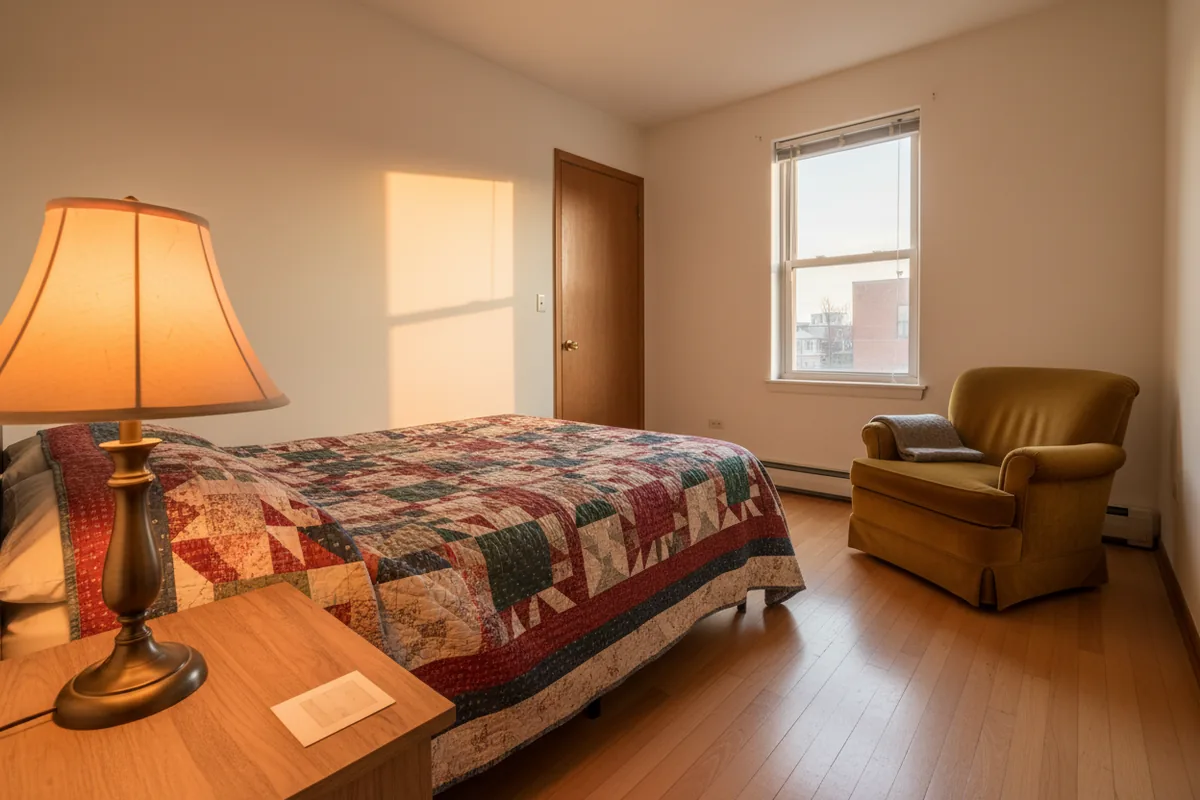
The boxes may be stacked in a new apartment, a retirement community or an assisted living room. You may be a parent who just moved, an adult child helping from nearby or far away, or an executor handling a relative's belongings. Whatever the situation, the first days tend to center on two things: function and familiarity. Much of the rest, including the deeper organizing of closets and storage, can wait.
After a senior move, unpacking and settling in means turning boxes and furniture into a home that works: everyday belongings placed within easy reach, furniture arranged to fit the new rooms, and familiar things in view. It is its own phase of the move. It begins when the truck leaves and often continues for some time after.
On this page
- What Unpacking and Settling In Means After a Senior Move
- Families and Situations This Phase Typically Involves
- How the First Days in a New Home Vary From Person to Person
- When Memory or Thinking Changes Are Part of the Move
- Taking Inventory and Protecting What Cannot Be Replaced
- When Items Arrive Damaged or Missing
- Staying Connected After the Move
- Questions to Raise With the Move Manager or Care Team
- Frequently asked questions
- Sources
What Unpacking and Settling In Means After a Senior Move
Unloading and settling in are different jobs. Unloading puts boxes and furniture inside the door. Settling in makes the space usable for the person who lives there. In practice, that usually means getting clothing, kitchen basics and toiletries into places that are easy to reach, setting furniture in the spots planned for it, hanging photos and putting familiar objects where they can be seen, and clearing walkways of empty boxes and packing material.
A senior move manager is a professional who plans and coordinates the practical steps of a move for an older adult. Move management is the name for that work, from sorting and packing before the move to setting up the new home afterward. A senior move manager can coordinate the unpacking and settling-in work or do it directly, as part of move management. Each provider's written agreement states what its own work includes.
Families and Situations This Phase Typically Involves
The setting shapes the work. Settling in might follow a move to a smaller private home, condo or apartment, to an independent living apartment or retirement community, or to an assisted living community, where staff are part of daily life.
Several people often share the work. The person who moved decides where things go when they are able to, because it is their home. Adult children and other relatives often unpack, run errands and keep track of what is still missing. A caregiver may know the daily routines that the room's setup needs to support. A senior move manager may coordinate the unpacking or do it.
Sometimes an executor or trustee is part of the picture as well. This can happen when belongings come out of a family home while an estate is being settled, or when a professional manages a person's affairs. Those matters, such as the estate, the will and any sale of the house, run on their own track. Settling into the new space can move forward alongside them.
How the First Days in a New Home Vary From Person to Person
No two people settle in the same way. A few factors shape both how fast the work goes and how much there is to do:
- The volume of belongings. More items take more decisions about where each one goes.
- The layout of the new space. Smaller rooms, a different kitchen or less closet space can change where familiar things fit.
- Physical stamina. Some people want to place every item themselves. Others prefer to direct the work while someone else does the lifting.
- Familiarity with the setting. A person who has visited the community before may find their way more easily than someone seeing it for the first time.
The emotional side matters as much as the practical one. A new room can feel unfamiliar even when everything in it is familiar, and that can be hard for the person who moved and for the family helping them. The National Institute on Aging's page on long-term care facilities says that a move into a care setting can be stressful, and that it may take some time for everyone to adjust.
When Memory or Thinking Changes Are Part of the Move
Memory or thinking changes can affect which room arrangement works well. They can also affect how long it takes someone to get oriented in a new place. For some people, keeping familiar objects in familiar positions may matter more than it does for others: a favorite chair near the window, photos where they used to sit, the same bedside items in the same order. The NIA page notes that some facilities offer special programs for people with Alzheimer's disease and other types of dementia. The care team or the person's physician can speak to an individual's needs, and the move manager and family can then shape the setup around that guidance.
Taking Inventory and Protecting What Cannot Be Replaced
A moving inventory is a written record of the items being moved. It may include notes and photographs. The California Bureau of Household Goods and Services (BHGS) flyer Helpful Tips When Moving, written for moves within California, advises people to take notes and photographs of belongings before and during the move. That record becomes useful at unpacking, when the household checks what arrived and in what condition.
The same BHGS flyer advises people to move irreplaceable items themselves. Its examples are important documents, family photos and jewelry. Keeping those items with the person who moved means they do not have to be found in a stack of boxes during the first days.
When Items Arrive Damaged or Missing
Unpacking is often when a household first notices a scratched dresser, a broken lamp or a box that never turned up. The notes and photographs from before and during the move are what make it possible to compare what was packed with what arrived. A family that kept those records can point to how an item looked before it left the old home.
The BHGS flyer says that all household movers must have a permit issued by BHGS. It also says that people can file a complaint with BHGS online or by phone if something goes wrong during a move. The flyer is written for moves within California. A move between states follows federal rules instead, and California's flyer does not apply to it.
Staying Connected After the Move
The National Institute on Aging's page on long-term care facilities advises that, once the person has moved, family members check in regularly to see how they are doing. The same NIA page suggests getting to know the staff before the move and talking with them about how to make the transition go smoothly. It suggests speaking up for the older adult's needs and preferences, listening to concerns without arguing about why the person needs to be there, and building a working relationship with staff.
Regular contact lets a family notice how the person is adjusting: whether the room still works for them, and whether something familiar is missing. The NIA page also mentions watching for signs that the person may need more attention or may not be getting the care they need. Those observations are worth bringing to the staff. The care team decides how care is adjusted.
Families have feelings about the move too. The NIA page says those feelings can range from loss and guilt to relief, and it suggests sharing them with a social worker or mental health professional.
Questions to Raise With the Move Manager or Care Team
A floor plan for the new home is a scaled layout of the new rooms. It is used before the move to decide which furniture goes where and whether each piece fits. When unpacking begins, that plan guides the setup. Questions that families often raise include:
- How was the floor plan for the new home prepared, and who decided on the furniture placement?
- Can the layout change after the person has lived in the space for a while?
- What happens to items that were not brought to the new home?
- How does the move manager coordinate with the household goods mover on move day and at unpacking?
- Who checks the moving inventory against what arrived?
- How does the care team at the new setting help a new resident get oriented to the building, meals and daily routines?
- Whom should the family contact on staff with questions after the move?
For many families, a practical starting point is locating the moving inventory and the photos taken before the move, and reading the BHGS flyer before raising any delivery concern with the mover.
Ready when you are — and not before.
A first conversation is simply a conversation. With your consent, your request may be passed to a partner who may respond.
Frequently asked questions
What does unpacking and settling in involve after a senior move?
The first priority is usually the items a person reaches for every day, so the new home works on the first night. Arranging furniture to the floor plan, hanging photos and clearing walkways follow. Deeper organizing of closets and storage can come later. A senior move manager's written terms state which of these tasks its work covers.
How long does it take to settle in after moving?
No set length applies. The volume of belongings, the layout of the new space, the person's stamina and how familiar the setting feels all shape the pace. Emotional adjustment can run on a different timeline from the unpacking itself; the National Institute on Aging notes that adjusting to a care setting may take some time for everyone.
What should be moved personally rather than by the moving company?
The California BHGS flyer advises moving irreplaceable items oneself, naming important documents, family photos and jewelry. In the first days, keeping those items with the person who moved also spares the household from searching for them among unopened boxes.
What is a senior move manager and what do they do during unpacking?
A senior move manager plans and coordinates the practical steps of an older adult's move. During unpacking, that can mean setting furniture according to the floor plan, placing belongings and preparing the new home for daily use, either directly or by coordinating others, including the household goods mover.
How can family members stay connected after a parent moves into a care facility?
The National Institute on Aging advises checking in regularly and building a relationship with staff. Visits are also a chance to see whether the room's setup still fits the person's routine, which can be raised with the move manager or care team if something needs to change.
What is a floor plan for the new home and why does it matter?
It is a scaled layout used before the move to plan where furniture goes. Beyond confirming that pieces fit, it lets the person who is moving see in advance where familiar things will sit, which can make the new room feel recognizable on arrival.