

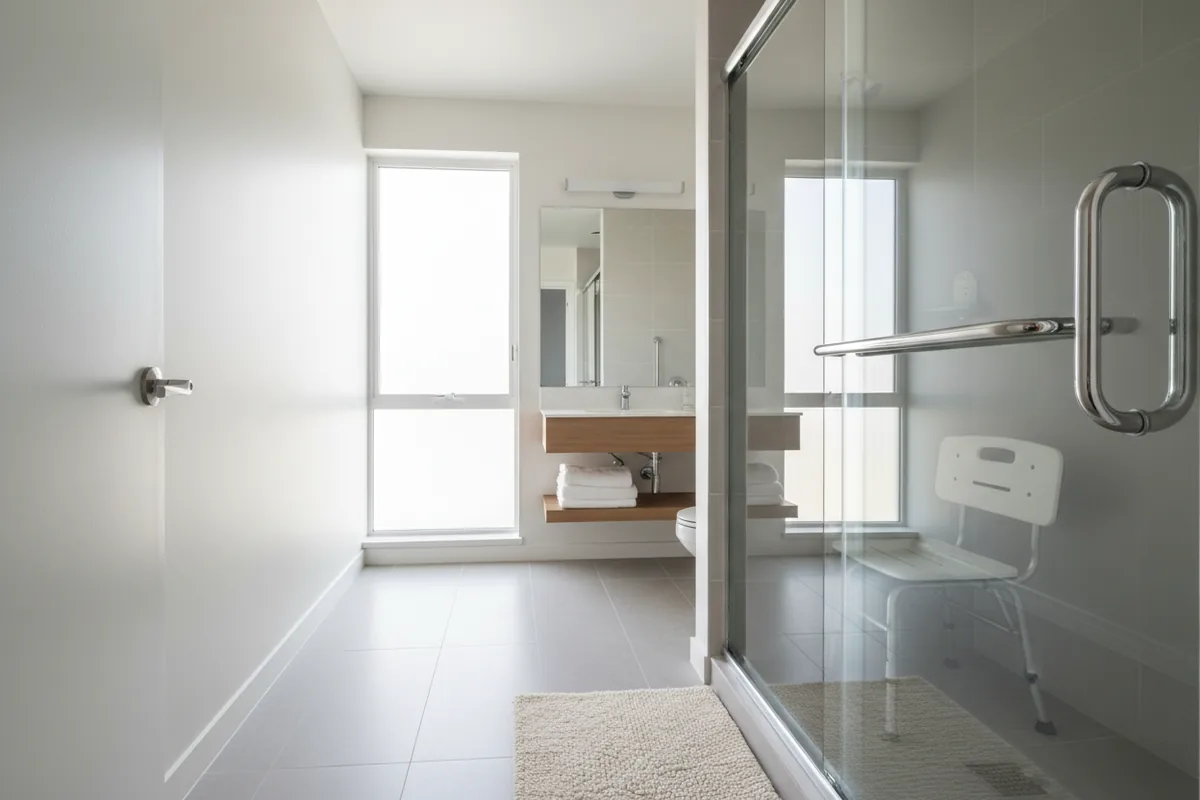
You may be the older adult making the move. You may be an adult child organizing things from across town or across California, or a caregiver working out how a smaller condo or an assisted living apartment will function on day one. In each case the core question is the same: will this space support the routines of the person living in it? Some details can wait. A working bedroom, bathroom and kitchen corner come first.
Senior home setup is the work of making a new home usable and familiar for an older adult from the first night. It covers where the bed, chair and lamps go, clear paths between rooms, a safe bathroom, and everyday items within reach. It differs from the move itself and from unpacking, which is only one part of it.
On this page
- What Senior Home Setup Means for Families
- Who Typically Goes Through a Senior Home Setup
- A Room-by-Room Approach to Setup
- How Setup Needs Vary From Person to Person
- Planning, Coverage, and What the Rules Say
- Questions to Raise With the Care Team Before and After the Move
- The Practical Next Step
- Frequently asked questions
- Sources
What Senior Home Setup Means for Families
Setup turns a set of rooms into a place where someone can wake up, get dressed, eat and rest without searching for things. Unpacking moves belongings out of boxes. Setup decides where they go and why.
The work looks different in two main settings.
| Setting | What setup usually centers on |
|---|---|
| A private or downsized home | Arranging furniture to fit the space, checking each room for hazards, and placing daily items where they are easy to reach |
| An assisted living or retirement community | Fitting chosen belongings into an apartment or room, following the community's own rules, and getting to know the staff |
For a private home, the National Institute on Aging's page Aging in Place: Growing Older at Home covers planning around an older adult's needs. For a residential facility, the Institute's page on long-term care facilities offers suggestions for the move-in itself. For this site's readers, California law governs any rule that applies to the move or the new setting.
Who Typically Goes Through a Senior Home Setup
A home setup can apply to several kinds of moves and people:
- An older adult moving to a smaller home. This is downsizing, also called rightsizing: choosing the belongings that fit a smaller space and the life lived in it.
- An older adult moving into a residential community. Residential, or live-in, options include board and care homes, nursing homes, assisted living facilities and continuing care retirement communities.
- Someone coming home after a hospital or rehabilitation stay. An existing home may need to be rearranged.
- A family member or caregiver. Some families coordinate the setup on the older adult's behalf, sometimes from far away.
Assisted living is for people who need help with daily care, but less help than a nursing home provides. A continuing care retirement community, also called a life care community, offers several levels of service in one location.
Which setting fits a particular person is decided by that person, their family and their care team. The setup follows from that decision.
A Room-by-Room Approach to Setup
The way a person moves around their home shapes almost every other setup choice. A practical method is to walk through the new space one room at a time, noting possible problems and safety issues as they appear. Immediate dangers, such as loose stair railings and poor lighting, come first; other improvements follow.
A simple pass through each area might look like this:
- Entry and hallways. Is each path lit? Are railings on any steps firm? Is the route from the door to the main rooms free of boxes and furniture?
- Bedroom. Is there a clear, lit path from the bed to the door and on to the bathroom? Are a lamp and daily items within reach of the bed?
- Bathroom. Is the room well lit, and is the way to it easy to follow at night? Are toiletries and towels placed where they can be reached without strain?
- Kitchen corner. Are the dishes, food and tools used every day within easy reach rather than high or low?
- Living area. Does the favorite chair have room around it, with a lamp nearby and walkways kept open?
The NIA offers a Home Safety Checklist worksheet with suggestions for finding and removing hazards around the house, and it is a useful companion for this walk-through. Not every suggested change may be needed for every person. Home safety also benefits from a fresh look every so often as needs change.
How Setup Needs Vary From Person to Person
Several factors shape how the room-by-room work plays out:
- The size and layout of the new space. A condo or an assisted living room holds less than a family house, so the furniture that comes along has to fit both the floor and the daily routine.
- What the person is bringing. A floor plan for the new home is a measured drawing of each room. It shows whether a favorite recliner, a dresser or a bookcase will fit before moving day.
- Familiarity. Some people settle more easily when well-known objects and a consistent arrangement surround them. Others welcome a fresh start.
- Health conditions. An illness could make it hard for someone to get around or take care of themselves in the future, and that possibility can shape today's layout. A health care provider can help answer those questions.
Each person's needs differ, and they can change over time. The setup that works at move-in may need adjusting later.
Planning, Coverage, and What the Rules Say
Planning ahead gives time to set up a home to meet a person's needs as they age. Conversations with family, friends and other caregivers about what support is needed are part of that planning, and the decision can be revisited as needs change.
Cost is a common concern with safety changes. According to the NIA Aging in Place page, help paying for repairs and safety updates may be available, and state housing finance agencies, social services departments, community development groups and the federal government are places to look for financial aid programs and discounts.
Moving into a residential facility brings its own fine print. Exact arrangements in assisted living vary by facility and by state, so each community's written terms are where its own rules appear.
On cost, the NIA long-term care facilities page says Medicare does not pay for assisted living. Medicaid may cover some aspects of assisted living, depending on the state and whether the person is eligible, and some long-term care insurance policies partially cover this kind of care. The program or the insurer decides how its rules apply to a particular person.
Rules for care settings differ from state to state. For a move within California, California's rules govern. In practice, those rules and the community's terms often answer a family's practical questions before any furniture moves.
Questions to Raise With the Care Team Before and After the Move
Getting to know the staff before move-in, and talking with them about ways to make the transition go smoothly, is one of the NIA's suggestions for a move into a facility. These questions can help shape those conversations:
- Which safety features does the apartment or room already have, and which changes are allowed?
- Which furniture, personal items and familiar objects can come along, and how much space is there for them?
- How does the setting support daily routines, such as meals, getting dressed and rest?
- Who is the contact person when something in the room needs to change after move-in?
- How do the staff and the family share updates once the person has settled?
Families can also act as advocates for the older adult's needs and preferences, listening to their concerns without arguing about why they need to be there. After the move, regular check-ins and a working relationship with staff help the family and the community work together.
Feelings about moving an older adult into a new place may range from loss and guilt to relief. A social worker or mental health professional is one person to share those feelings with.
For a private home, the same questions can go to the people helping with the move, and to the person's health care provider where a health question arises.
The Practical Next Step
Two documents help a family move from planning to setting up. The first is a floor plan of the new space, whether it comes from the community or is measured by hand. The second is the NIA Home Safety Checklist worksheet, kept open during the room-by-room walk through the new home.
Ready when you are — and not before.
A first conversation is simply a conversation. With your consent, your request may be passed to a partner who may respond.
Frequently asked questions
What does senior home setup involve after a move?
It is the work of arranging a new space so daily life functions from the first day. That includes furniture placement, safety features and familiar items within reach. Unpacking empties the boxes; setup decides where things belong. The NIA Aging in Place page suggests going room by room to find and correct possible hazards.
How do you set up a home for an elderly parent moving in?
The NIA Aging in Place page suggests checking each room and correcting immediate dangers first, such as loose stair railings and poor lighting. Clear pathways, an arrangement your parent knows, and a floor plan that matches what they are bringing all shape the setup. Needs differ from person to person and can change over time.
What should families bring when moving a parent into assisted living?
The NIA long-term care facilities page says assisted living residents usually live in their own apartments or rooms and share common areas. It also says arrangements vary by facility. The community's written terms state what can come along, and the staff can answer questions about space and furnishings.
What changes at home matter most as a person gets older?
The NIA Aging in Place page points to immediate dangers such as loose stair railings and poor lighting as the first things to correct. It also says not every suggested change may be needed. It recommends reevaluating home safety as needs change, because what matters most differs from person to person.
Does Medicare pay for home setup or home modifications?
Medicare's own program text states what it pays for and under what conditions. For repairs and safety updates, the NIA Aging in Place page points to state housing finance agencies, social services departments, community development groups and the federal government for financial aid programs and discounts.